Windracers ULTRA to be deployed in Greenland for glacier surveying
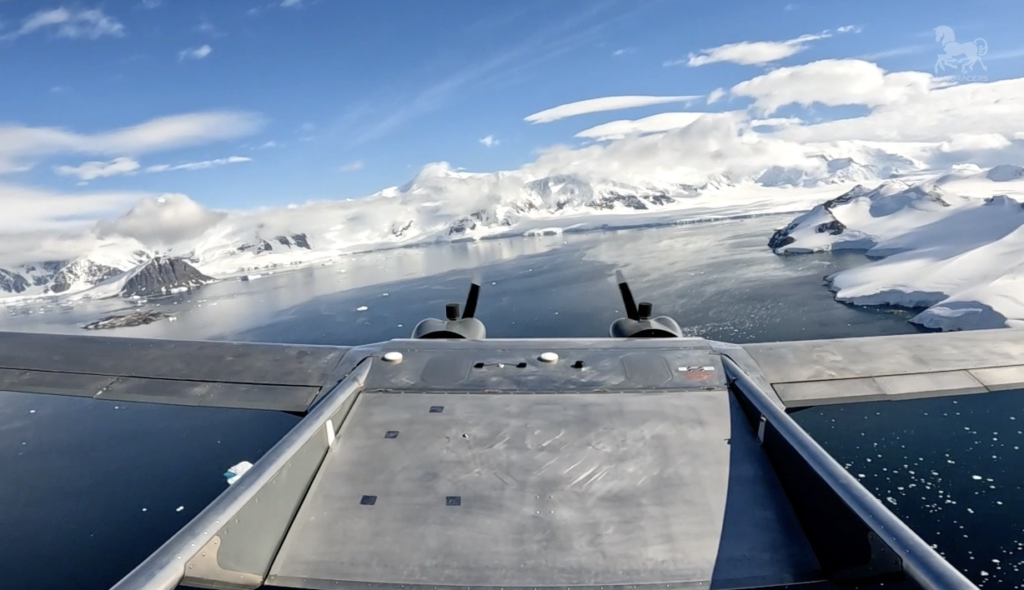
LONDON (UK) – 11 March 2026 – Windracers ULTRA, the world’s most accomplished dual-use heavy-lift drone, will be deployed in Greenland to unlock new climate data in one of the most remote and extreme environments on Earth.
The deployment planned for June 2026 forms part of the GIANT programme (Greenland Ice sheet to AtlaNtic Tipping points from ice loss), an international research mission to understand how melting glaciers are pushing the Atlantic Ocean towards a critical climate tipping point.
Led by a team of international scientists, GIANT will use a suite of technologies, including Windracers ULTRA, along with marine robots, satellites and sensors to better understand how ice interacts with ocean waters.
Capable of carrying payloads of over 150 kg and flying up to 2,000 km, Windracers ULTRA will be deployed to Northwest Greenland to map the base of the floating ice shelf and the valleys hidden beneath the ice further inland using a new ice penetrating radar system.
Northwest Greenland is defined by a high-Arctic climate, significantly colder and more isolated than the more temperate and accessible regions of the south and southwest, with a rugged and much harsher landscape.

Image caption: Greenland science expedition aims to unveil critical climate insights. Credit: BAS
Speaking about the GIANT programme, Dr. Kelly Hogan, Marine Geophysicist, British Antarctic Survey & Lead Creator on GIANT said: “We’re in a moment where our tools have finally caught up with our questions. With autonomous vehicles, advanced sensors, and powerful modelling — boosted by AI — we can explore glacier-ocean interactions in ways that were unimaginable just a few years ago.”
With drone fieldwork led by the British Antarctic Survey, Windracers ULTRA will conduct long range autonomous missions over the Petermann Glacier as well as aim to investigate the local Narwhal population in the nearby ocean.
Rob Datson, Chief Flight Operations Officer at Windracers, said: “Operating in Greenland is about more than distance, it is about reliability and resilience in an environment where there is little margin for error.
“Windracers ULTRA is designed to fly long-range missions autonomously and carry the sensors scientists need with confidence to create new data and see the unseen. Windracers is excited to be working with the British Antarctic Survey once again and to support this important research.”
The work sits within ARIA’s Forecasting Tipping Points programme, which aims to improve understanding of how the Greenland Ice Sheet interacts with the ocean and atmosphere, and how accelerating ice loss could affect global climate dynamics.
This programme marks the second expedition Windracers will complete with the British Antarctic Survey, following operations in Antarctica unlocking new climate research in 2024.
For all media enquiries, please contact:
Windracers newsdesk at press@windracers.com