Autonomous aircraft delivery when landing isn’t possible is a crucial capability for any organisation operating in operating in disaster zones, contested areas and remote terrain; these are situations in which runways are often unfeasible or dangerous.
If ground access fails, aid stalls and resupply convoys are easy to target; autonomous aircraft can deliver a payload without ever touching down, keep missions moving and keep communities resupplied.
Windracers ULTRA pairs short take-off and landing capability with precision airdrop so planners have a way to reach places conventional logistics cannot.
The Debrief
- Runways aren’t always available. Damaged infrastructure, contested ground and remote terrain regularly rule out landing.
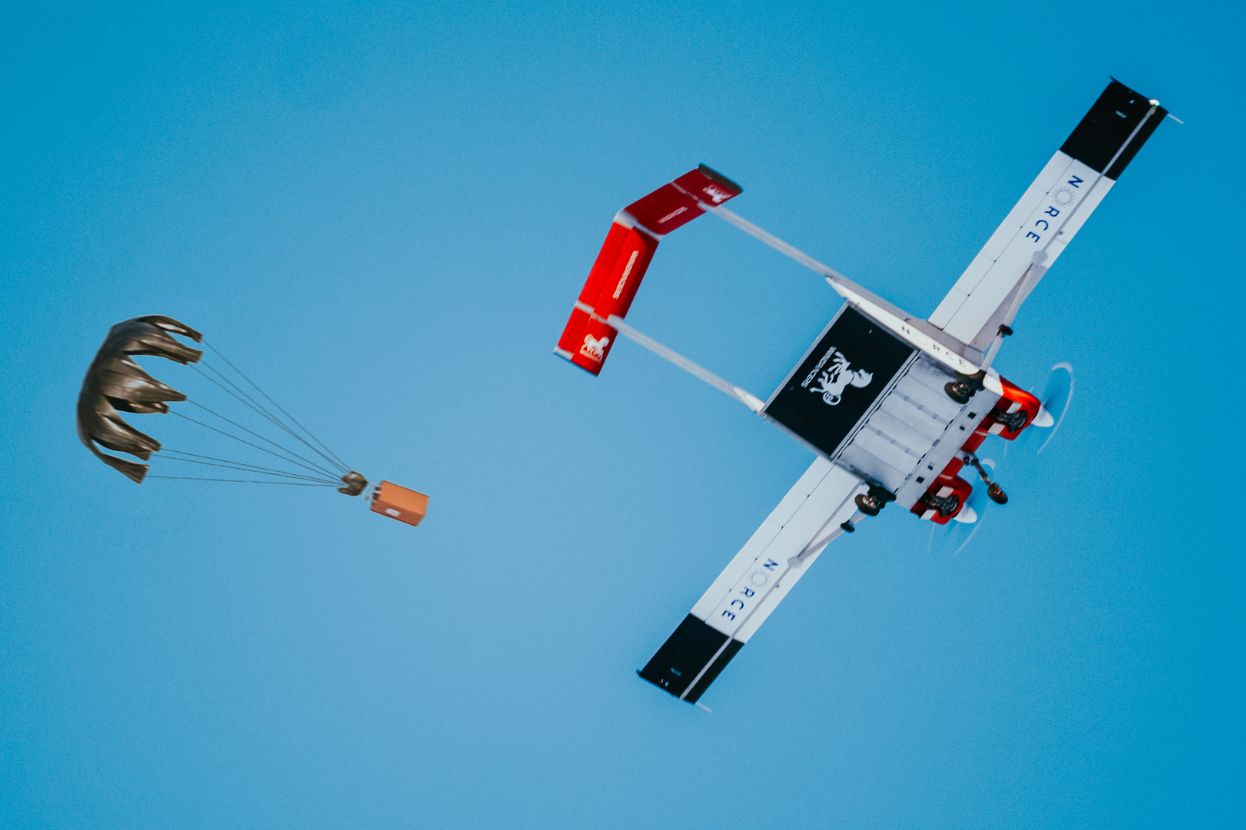
- Precision airdrop delivers cargo accurately to a marked point, guided by GPS and flight control, without the aircraft ever touching down.
- Crisis-hit populations in 36 countries faced high-to-extreme access constraints between December 2024 and May 2025, and natural disasters regularly cut off roads and runways too, so the need is urgent.
- Remote and island communities can be supplied without building or maintaining an airstrip. ULTRA can operate from unprepared surfaces such as grass, gravel, dirt tracks, snow and ice, or switch to a precision drop instead.
- Defence resupply is safer from the air, as aerial delivery keeps crews out of the danger zone.
When the Ground isn’t an Option, the Sky Still Is.
Windracers ULTRA delivers by landing on short, improvised strips or by precision drop, whichever the mission demands. Explore ULTRA’s capabilities or get in touch to discuss your operation.
When Landing Isn’t Possible
Runways are not a given.
Earthquakes and flooding destroy airstrips before aid can reach them, and fighting fronts turn open ground into dangerous terrain. Islands, mountain outposts and forward operating bases often have no prepared surface for a fixed-wing aircraft at all.
In each case, waiting for a landing site to become available costs time that casualties, patients and military personnel on the ground do not have.
Conventional cargo aircraft and helicopters need a runway, a helipad or, at minimum, a stretch of cleared, stable ground. Ground convoys need passable roads and an acceptable level of risk.
When neither exists, the only remaining option is often to deliver from the air without landing at all.

How Precision Airdrop Supports Humanitarian and Defence Operations
Precision airdrops for humanitarian and defence operations work by releasing cargo, guided by GPS and onboard flight control, to land accurately on a predetermined point without the aircraft ever descending to ground level.
This removes the two biggest constraints on delivery into hostile or damaged environments: the need for a safe landing surface and the need to put an aircraft and its crew on the ground.
Between December 2024 and May 2025, crisis-affected populations in 36 countries experienced high to extreme humanitarian access constraints, driven by insecurity, damaged infrastructure and bureaucratic restrictions.
In environments like these, waiting for road or runway access to clear is not a viable strategy. An autonomous aircraft that can drop supplies accurately, repeatedly and without a crew on board turns an inaccessible location into a reachable one.
Reliability Is Pivotal
Emergency response is rarely about a lone delivery. More commonly, the goal is to sustain supply over days or weeks; repeat medical resupply, fuel, ammunition or food is distributed on a predictable schedule.
Autonomous, fixed-wing platforms with long range and heavy payload capacity, like Windracers ULTRA’s 200 kg-plus payload over up to 2,000km, are built for that kind of sustained tempo.
Supplying Remote Locations Without Landing
Island communities and offshore installations face the same problem, though there may be no obstacle beyond distance and, sometimes, cost. Building or maintaining an airstrip for a handful of deliveries a year rarely makes sense, and ferry or barge services can be slow, weather-dependent or simply absent outside a fixed schedule.
Short take-off and landing capability changes that equation.
ULTRA can use short, unprepared or improvised strips that would rule out conventional cargo aircraft and switch to a precision drop where even that is impractical.
For supplying remote locations without any landing infrastructure at all, this flexibility means one platform can serve a scattered network of communities that would otherwise need several different transport solutions stitched together.
The same logic applies to research stations, mining sites and other installations placed deliberately far from existing infrastructure. Reliable delivery, not proximity to a runway, becomes the deciding factor in where a mission can operate.
Emergency Resupply Autonomous Aircraft Capabilities for Inaccessible Areas
Defence resupply carries an added layer of risk: the ground itself may be actively contested. Sections of the front line in Ukraine have become no-go zones for supply convoys, with any vehicle movement drawing autonomous aircraft surveillance and artillery fire.
Emergency resupply autonomous aircraft capabilities for inaccessible areas exists precisely because convoys, and the personnel who drive them, are increasingly exposed.
Windracers ULTRA has been operating in Ukraine for years, flying long-range missions that would put crewed aircraft and ground crews at unacceptable risk.
Resupply by uncrewed, autonomous aircraft is not limited to front-line logistics.
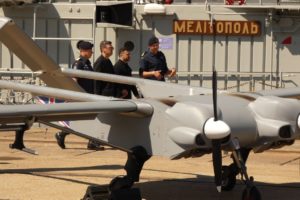
The Royal Navy trialled autonomous aircraft delivery between two warships in September 2025; spare parts were moved from vessel to vessel without a helicopter or a small boat. This is clear evidence that the same principle, delivery without a conventional landing or transfer point, applies across domains.
For defence planners, this capability changes what can be counted as reachable. A forward position cut off by terrain, distance or enemy fire is not necessarily unreachable. It may simply need a different kind of delivery.

Need to Supply Remote Locations Without Landing? Windracers Can Deliver Your Mission.
Windracers designs, manufactures and operates ULTRA, a dual-use heavy-lift autonomous aircraft built for missions where crewed aviation cannot go.
With a payload of 200kg, a range of up to 2,000 km and up to 15 hours of endurance, ULTRA combines short take-off and landing capability with precision airdrop, so delivery never depends on finding a runway.
It has supported defence resupply, air cargo, humanitarian relief and research missions, including more than three years of continuous operations in Ukraine.
Whatever your mission, ULTRA is built to deliver it.
Get in touch to discuss your operational requirements, or read more about Windracers.
FAQs
How does autonomous aircraft delivery work when landing isn’t possible?
Autonomous aircraft delivery when landing isn’t possible typically relies on either a short, unprepared landing strip or a precision airdrop, where cargo is released and guided to a marked point using GPS and onboard flight control. This means supplies can reach a location without an aircraft ever touching the ground. Windracers ULTRA supports both methods, so operators can choose whichever suits the ground conditions on the day.
What is a precision airdrop, and how accurate is it?
Precision airdrop is the guided release of cargo from an aircraft so it lands on, or very close to, a predetermined point rather than falling freely. Modern systems use GPS and flight control software to correct for wind and altitude during descent, improving accuracy over unguided drops. This makes it viable for delivering supplies into confined or populated areas where accuracy matters as much as speed.
Can autonomous aircraft resupply troops in contested or dangerous areas?
Yes, autonomous aircraft can resupply forward positions without exposing crews or convoys to the risks of ground movement. Platforms like Windracers ULTRA have flown long-range missions in active conflict zones, including over three years of operations in Ukraine. This reduces reliance on vehicle convoys that have become high-value targets on modern, autonomous aircraft-saturated battlefields.
How do humanitarian organisations deliver aid to areas with no usable airstrip or roads?
Humanitarian organisations increasingly use heavy-lift autonomous aircraft that can land on short, improvised strips or deliver by precision drop where no landing site exists at all. This allows aid to reach disaster zones cut off by damaged infrastructure, flooding or insecurity and supports repeat deliveries rather than a single one-off flight. It also reduces the need to put aid workers or aircrew directly into unstable or hostile environments.