Navies have been testing how heavy-lift autonomous aircraft are changing maritime resupply, and the results are now operational. Spares, mail, medical stores and urgent parts still need to move between ships and from shore to sea. The difference is that a crewed helicopter is no longer the only fast way to move them. Autonomous aircraft such as Windracers ULTRA give defence and offshore planners a way to shift meaningful loads with less risk to aircrew and fewer rotary-wing hours.
The Debrief:
- Navies are already moving stores between warships and from shore to ship by autonomous aircraft.
- Uncrewed resupply frees helicopters for the tasks only they can fly, such as moving crew.
- Autonomous aircraft can deliver on-demand and urgent cargo, reducing the cost of rotary-wing operations.
- Fixed-wing range and payload push resupply well beyond the immediate task group.
- Helicopters stay central, while autonomous aircraft absorb the routine work.
Need to Resupply at Sea Without the Rotor Hours?
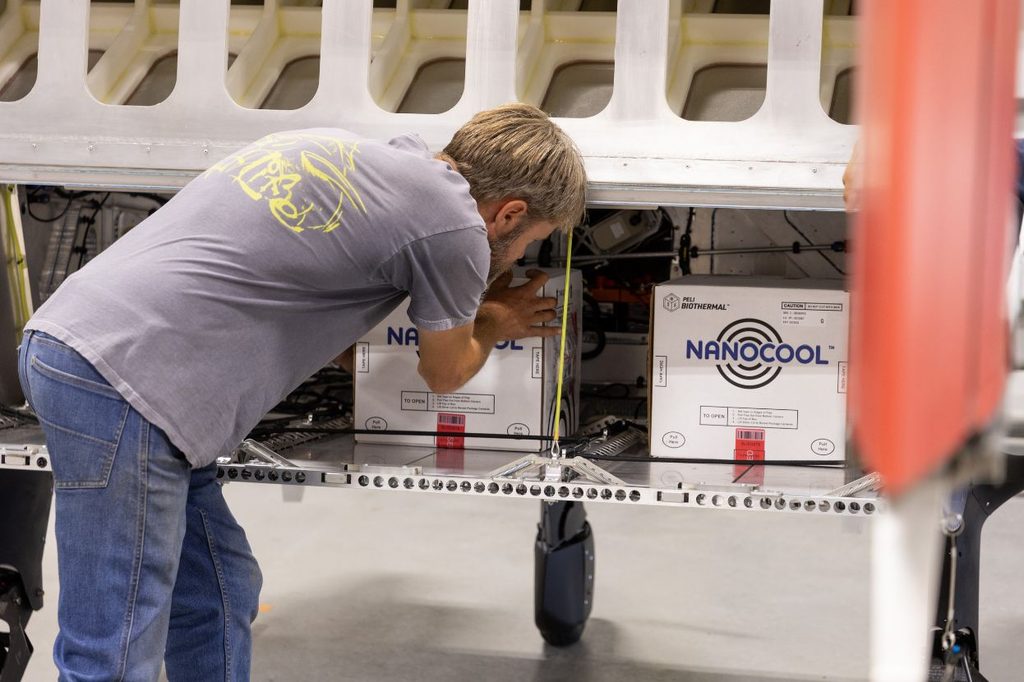
ULTRA moves up to 200kg of cargo autonomously, keeping crewed aircraft free for operational sorties. It doesn’t always need a runway either: with secure, accurate airdrops, cargo can be delivered to a chosen location. Find out more about ULTRA for defence logistics, or get in touch.
Autonomous Alternatives to Helicopters for Ship Resupply
Vertical replenishment by helicopter is proven and flexible. However, it is also expensive in flying hours, maintenance and aircrew fatigue. Every sortie spent moving a box of spares is a sortie lost to direct military operations, as well as surveillance or search and rescue. Boat transfers are slower and limited by sea state.
The Royal Navy has put the alternative to work at sea.
In September 2025 it completed its first ship-to-ship drone delivery, moving spare and repair parts from HMS Prince of Wales to HMS Dauntless during the Carrier Strike Group deployment to the Indo-Pacific. The aircraft flew autonomously for just over a mile before Dauntless’s crew guided it onto the flight deck. The Navy’s stated aim is a cheaper, more efficient alternative to helicopter or boat transfers, so those assets can focus on operational tasks.
Shore-to-ship resupply is moving too.
Allied navies are working the same problem from the shore. In mid-2025 the Royal Australian Navy flew a 6 kg printed component 6.5 km from shore to HMAS Choules in about eight minutes. In the US, Naval Air Systems Command sought industry proposals in June 2025 for large uncrewed aircraft able to carry at least 1,300 lb from ships offshore to forces ashore.
The direction of travel is clear; requirements are moving from small parts over short hops towards heavier loads at longer range.
Autonomous Aerial Resupply for Naval Operations: What Matters
Range and payload
Most recent naval trials have involved short transfers within a task group or close to shore. Fixed-wing aircraft extend that reach considerably. ULTRA carries a 200 kg useful load and has a range of up to 2,000 km (aircraft specification). For a task group operating far from a forward base, that opens up shore-to-ship resupply over distances well beyond the reach of short-range rotary platforms.
Proven on a carrier deck
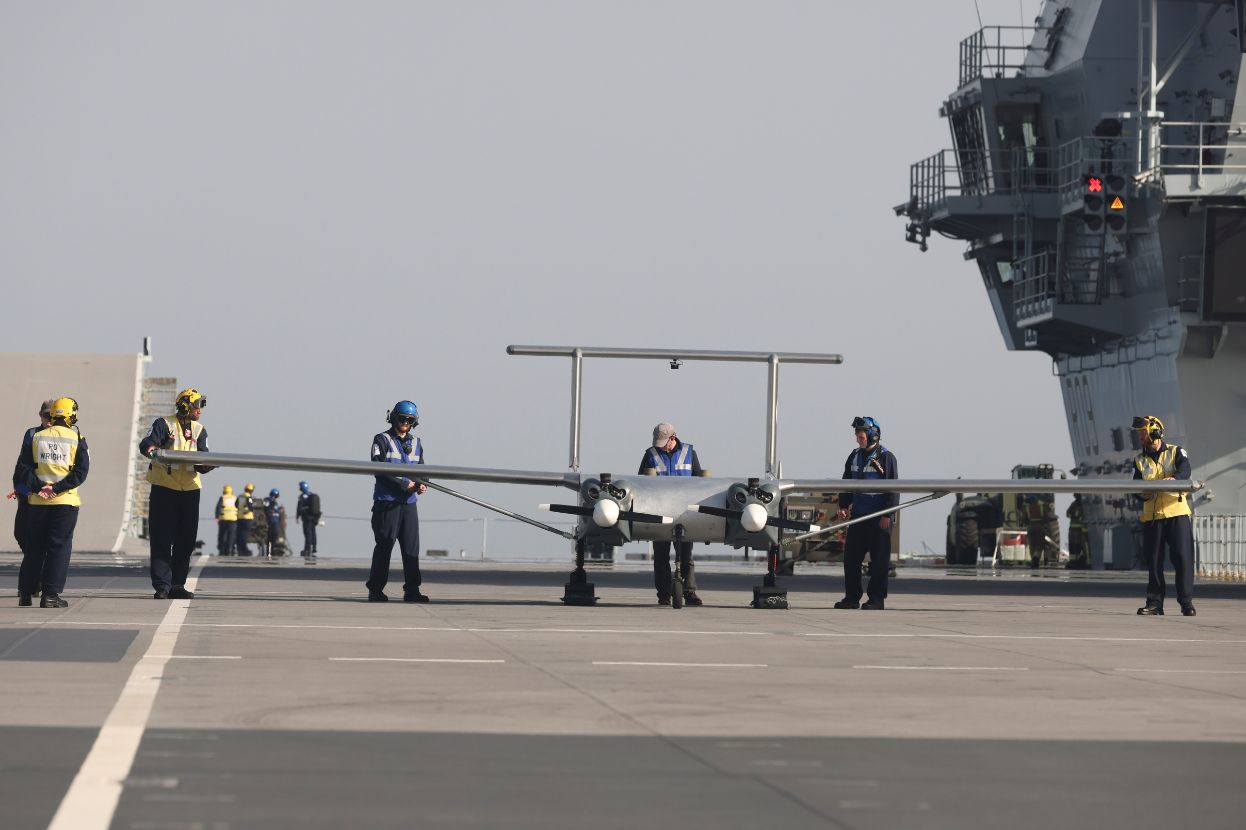
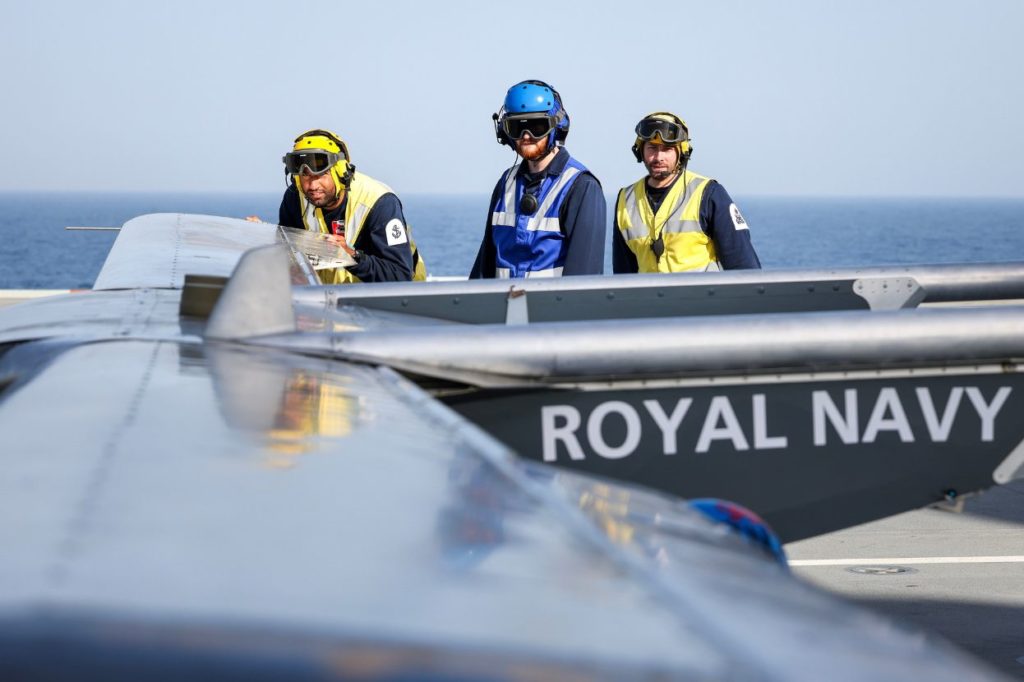
Windracers has already operated at sea. In 2023 its autonomous aircraft flew from Predannack on to the deck of HMS Prince of Wales off the Cornish coast, delivered its payload, relaunched and flew back. It was the first time a pilotless plane had flown on and off a Royal Navy carrier. Carrier Onboard Delivery is now listed among ULTRA’s defence use cases.
Autonomy and redundancy over open water
Over the sea, a single failure can end a mission and lose the cargo. The Windracers Autopilot uses a distributed, fault-tolerant architecture with no single point of failure and multiple redundant sensors.
ULTRA is built to operate in GNSS-degraded and RF-contested environments and has supported operations in Ukraine for more than three years. Mission Control software gives planners integrated route planning and real-time aircraft health monitoring when routes or conditions change.
Reducing Helicopter Reliance in Offshore Logistics
The realistic model is a mixed fleet. Helicopters keep the heavy and bulky loads, casualty evacuation, boarding operations and anything that needs a crew on scene. Autonomous alternatives take the routine and high-risk runs: spares, mail, medical consumables and sample returns, flown on demand and in weather that would ground a crewed sortie for safety reasons.
The same logic applies to offshore energy and research operations, where urgent parts and supplies often wait on helicopter availability. ULTRA has operated in Antarctica and Alaska, in temperatures as low as minus 40°C, with short take-off and landing on rough surfaces including ice and snow.
Deploying uncrewed resupply as a service
Not every organisation is ready to stand up its own autonomous unit. Through Windracers Operations, ULTRA can be deployed as a service, with Windracers handling mission assessment, planning and delivery, or training and supporting in-house operators. It’s a model Windracers already supports and operates across four continents.
ULTRA’s role goes beyond cargo, though. The same platform is well suited to surveillance and wide-area monitoring, and through the SWARM project, multiple ULTRAs have flown in formation to cover large areas quickly.
Windracers Delivers Your Maritime Resupply Mission.
Windracers engineers, builds and operates ULTRA, a dual-use heavy-lift autonomous aircraft supplied as a complete system of aircraft, autopilot and Mission Control software.
With a 200 kg useful load, 2,000 km range, a carrier deck landing on record and more than three years of operations in Ukraine, ULTRA gives maritime logistics teams a way to move critical cargo further, with less risk to crews and fewer helicopter hours. Download the ULTRA specification, explore ULTRA or get in touch to discuss your mission.
FAQs
How are heavy-lift autonomous aircraft changing maritime resupply?
Heavy-lift autonomous aircraft are taking over routine store transfers that once needed a helicopter or boat. The Royal Navy completed its first ship-to-ship uncrewed delivery in 2025, and other navies are testing shore-to-ship runs. The result is faster delivery of urgent parts and more helicopter hours available for operational tasks.
Can autonomous aircraft replace helicopters for ship resupply?
No, and they don’t need to. Helicopters are still the right choice for crew rotation, specialist rescue and evacuation, and many operators see uncrewed aircraft as complementary to their services. Many of the routine tasks helicopters perform today could be handled more efficiently by autonomous aircraft: single spare parts, resupply, immigration and customs documents, critical aid and wide-area surveillance. The key move is to match each mission to the right mode of transport.
Can a fixed-wing autonomous aircraft land on a ship?
Yes, given enough deck length and the right autonomy. In 2023 a Windracers autonomous aircraft landed on and took off from HMS Prince of Wales at sea. Fixed-wing autonomous aircraft offer greater range and payload than most rotary designs, which suits longer shore-to-ship routes.
How much can Windracers ULTRA carry?
ULTRA carries a 200 kg useful load over a range of up to 2,000 km. It is sold as a complete system, including aircraft, autopilot and Mission Control software, or can be deployed as a service through Windracers Operations.